
News
LM-A News
We publish a regular newsletter which is distributed via email. Its purpose is to encourage and support confessional Lutherans, by offering
devotions
teaching articles
a weekly memory verse
profiles of our members and interviews with a range of interesting people
news and upcoming events
prayers
The newsletter is available by subscribing below. You can access each issue in printable form on the right-hand side of this page. The lead article from each issue is also available below, so you can catch up on any that you missed.
NEW! Audio recordings of the newsletter devotion are now available, beginning in September 2026. To access the recordings, go to the individual devotion, or look under the Printable Copies for the week. Many thanks to David Harris for volunteering to make the recordings.
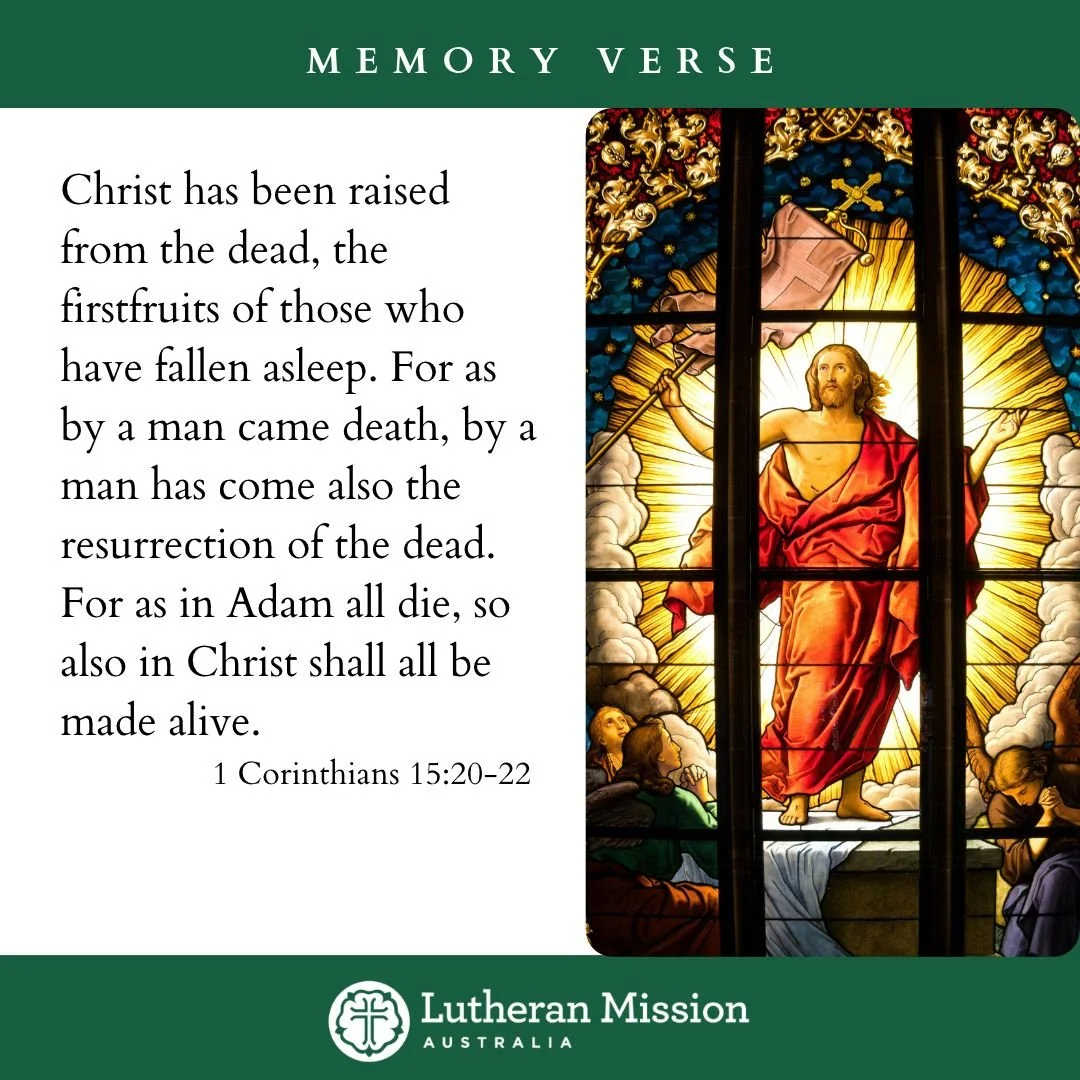
Preparing for Sunday
As you look forward to the Divine Service on Sunday, you may like to meditate on the readings for the week:
The First Reading: Ezekiel 34:11–16, 20–24
The Second Reading: 1 Corinthians 15:20–28
The Gospel Reading: Matthew 25:31–46
To read the Hymn of the Day and the collect for Sunday, please visit the Worship page and download the service order or insert for Sunday. Lectionary Notes are included each week.
2026 Synodical Magazine Print Edition
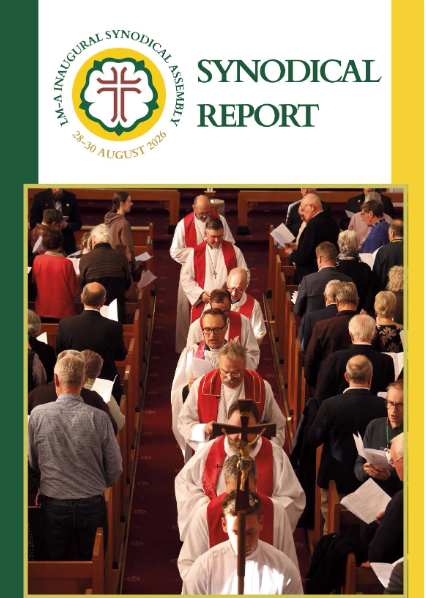
We have been contacted by a number of people asking that a professionally printed version of the 2026 Synodical Magazine be made available. To minimise double handling and extra workload for LM-A staff, the magazine is available as a Print-On-Demand product which anyone interested can purchase direct from the printer, Mixam Australia.
Magazines are available for $15.50 per copy, plus postage.
The free PDF printable version of the magazine is available in August 2026 of the ‘Printable Copies of Our Newsletters’ below.
Printable Copies of Our Newsletters
You may know of people in your family or people in your area who would love to read this newsletter but can’t access it for various reasons.
Please feel free to print off the following PDF versions of recent newsletters to share as part of your ministry of love and support for your brothers and sisters in Christ.
-
-
-
-
-
-
-
-
-
-
-
Issue 53, 17 December 2025 - Love in human form
Issue 52, 10 December, 2025 - Joy in the wilderness
Issue 51, 3 December, 2025 - Peace in the midst of turmoil
Issue 50, 26 November 2025 - Hope in the darkness
Issue 49, 19 November 2025 - SPECIAL EDITION: Walking Worthily
Issue 48, 12 November 2025 - Confessing with intrepid hearts
Issue 47, 31 October 2025 - Abiding in God’s Word
Issue 46, 15 October 2025 - Secure in the Scriptures
Issue 45, 1 October 2025 - Godliness with contentment
Issue 44, 17 September 2025 - Boldly proclaiming the gospel
Issue 42, 3 September 2025 - Blessing and joy
Issue 41, 20 August 2025 - Filled passion and zeal
Issue 40, 13 August, 2025 - Running with endurance
Issue 39, August 6, 2025 - Being made holy
Issue 38, July 23, 2025 - Taking refuge in the Lord
Issue 37, July 16, 2025 - Suffering Saints
Issue 36, July 9, 2025 - Sent out by Christ
Issue 35, July 2, 2025 - Justified by Faith
Issue 34, June 25, 2025 - The Good Confession
Issue 33, June 18, 2025 - Celebrating the Trinity
Issue 32, June 11, 2025 - Confessing the faith
Issue 31, June 4, 2025 - Filled with the Holy Spirit
Issue 30, May 28, 2025 - Sent out in Jesus’ name
Issue 29, May 21, 2025 - Living in God’s love
Issue 28, May 14, 2025 - Worshipping the Lord with thanksgiving
Issue 27, May 7, 2025 - Going Fishing
Issue 26, 30 April, 2025 - Healing Words
Issue 25, 16 April 2025, Transforming grief into joy
Issue 24, 9 April 2025, Loving and serving
Issue 23, 2 April 2025, Fasting and Feasting
Issue 22, 26 March 2025, Reading God’s Word
Issue 21, 19 March 2025, Keep on praying
Issue 20, 13 March 2025, Turning away from sin
Issue 19, 5 March 2025, Preparing our hearts
Issue 18, 26 February 2025, Jesus Only
Issue 17, 19 February 2025, Training for the Future
Issue 16, 12 February 2025, Friendship with Fellow Saints
Issue 15, 29 January 2025, Valuing women in the body of Christ
Issue 14, 22 January 2025, A story to tell
Issue 13, 16 January 2025, Living in our baptism
Issue 12, 7 January 2025, Responding in joy and faithfulness
-
Issue 11, 18 December 2024, Singing a new song
Issue 10, 11 December 2024, Practicing the peace of God
Issue 9, 28 November 2024 - Happy Birthday, LM-A!
Issue 8, 20 November 2024 - Dealing with Anger
Issue 7, 6 November 2024 - Shining Lights
Issue 6, 24 October 2024 - Crying out to the Lord
Issue 5, 16 October 2024 - Dwelling in Unity
Issue 4, 9 October 2024 - Not Alone

Back to the Catechism: The Lord’s Prayer
This article was first published in The Canadian Lutheran in August 2017 and is reproduced here with permission. It is the third in a series exploring the six chief parts of Luther’s Small Catechism. The rest of the series will be reproduced in subsequent issues of the newsletter.
Teach Us to Pray
The Lord’s Prayer is the third part of Luther’s Catechism. We have heard what God would have us do and leave undone, and seen how far short we fall in keeping them. We confess faith in the God who has created us, redeemed us in Christ, and called us to faith through the preaching of the Good News. The Lord’s Prayer is the prayer our Lord gave to his disciples, those who believe in Him, when they asked Him to teach them how to pray. He said, “When you pray, pray like this.” Thus not only is the Lord’s Prayer a prayer that the church has prayed ever since our Lord gave it to us; it is the prayer that serves as a model for all of our prayers.
It has been said that our worship is nothing else than saying back to God what He has said to us. That certainly is the case with the Lord’s Prayer. Jesus teaches us to pray for those things that God would have us trust Him for.
Messengers of the Gospel
Then I saw another angel flying directly overhead, with an eternal gospel to proclaim to those who dwell on earth, to every nation and tribe and language and people. And he said with a loud voice, “Fear God and give him glory, because the hour of his judgment has come, and worship him who made heaven and earth, the sea and the springs of water.”
Revelation 14:6-7
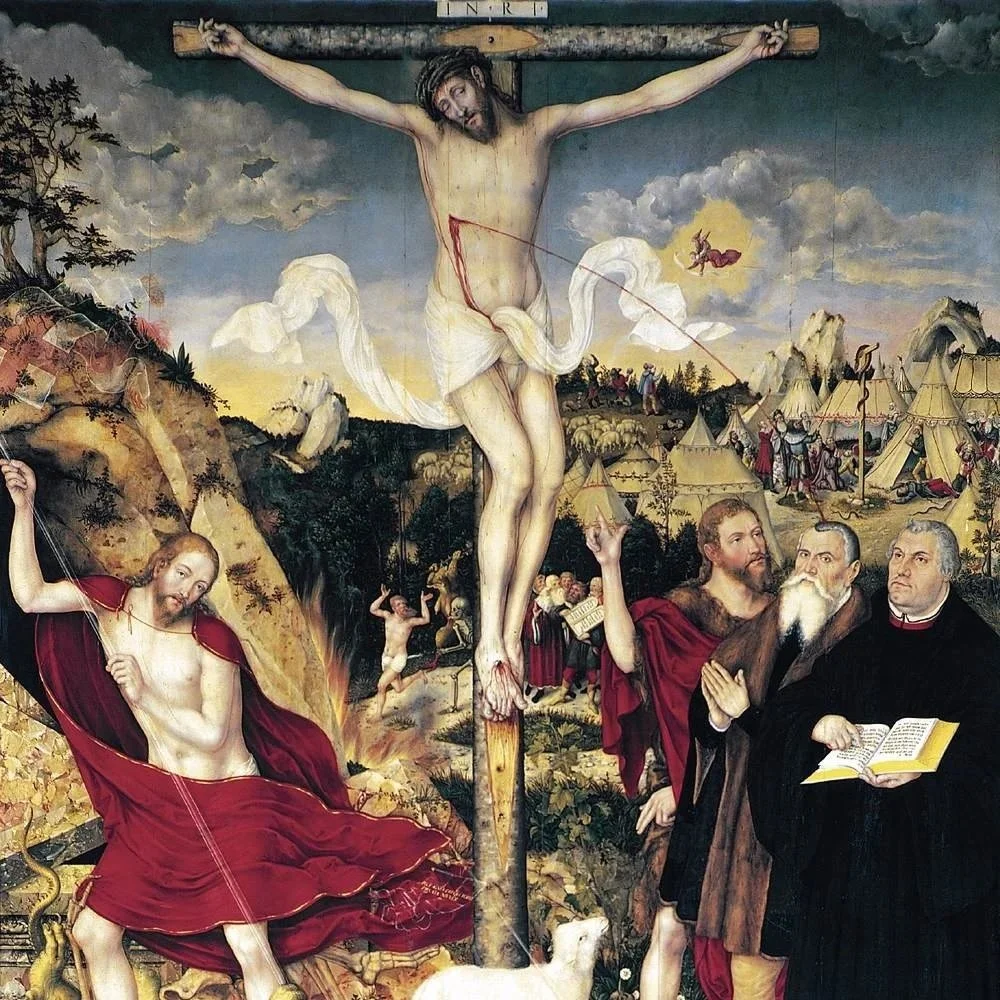
When Luther died in 1546 it gave people pause to consider the true impact and emphasis of his life’s work. What was the essence of what he stood for? What was this Reformation really about? What was the lasting message that Luther himself would have people hold on to?
At his funeral, Luther’s friend and colleague Pastor Johannes Bugenhagen preached and while it might be unexpected to our ears today, Bugenhagen identified Luther with the angel of Revelation 14 who proclaimed ‘an eternal gospel’ to all on earth. This was not some schmalzy spirituality suggesting that people become angels when they die (which of course is not true). Rather Bugenhagen was identifying Luther as God’s messenger (angel) whose primary work was to proclaim the unadulterated gospel and to restore it to its rightful place as the central message and work of the church.
As Bugenhagen honoured Luther with this recognition, he was also rightly defining the essence of the Reformation. Still today some want to focus on the impact the Reformation had on history and the way it helped define the German nation, but it was not primarily a cultural or political movement. In fact the Reformation was not a movement, but rather a message (see Pless: 68-69). A message that God freely justifies sinners through faith alone in Christ alone. A message that calls for confidence in the Word of the Lord that endures forever (1 Peter 1:25) and who’s central message is this same eternal gospel fulfilled in Christ Jesus who ‘died for our transgressions and was raised for our justification’ (Romans 4:25).

Back to the Catechism: The Creed
This article is the second in a series exploring the six chief parts of Luther’s Small Catechism. It was written by Rev. Dr. Edward G. Kettner, Professor Emeritus of Systematic Theology at Concordia Lutheran Seminary (Edmonton) and was first published in The Canadian Lutheran in April 2017 .
We All Believe in One True God
When Luther outlined the order of the catechism, he noted that first we need to see what God would have us do and leave undone. Then we need to see what provision God has made for us because we have not done or have left undone what God says we should. The commandments clearly give us instruction for our life as we should live it as people of God, and show us that we have not lived up to their standards. From there Luther takes us to the Creed, where we see what God has done to preserve our lives, both on earth and in relationship to Him.
While there are three creeds that have been widely used in the Church down through the ages, the focus in the Catechism is on the Apostles’ Creed. This Creed has become the creed used in baptism, the creed which summarizes what the Scriptures teach about the God Who Is, and the God whom we confess as our saving God.

Back to the Catechism: The Ten Commandments
This article by Rev. Dr. Edward G. Kettner, Professor Emeritus of Systematic Theology at Concordia Lutheran Seminary (Edmonton), was first published in The Canadian Lutheran in January/February 2017 and is reproduced here with permission. It is the first in a series exploring the six chief parts of Luther’s Small Catechism. The rest of the series will be reproduced in subsequent issues of the newsletter.
Why the Law Matters
Not long after Luther rediscovered the Gospel of free grace, he realized how terribly ignorant both the people and the clergy were of the basics of the Christian faith. Beginning already in 1518, Luther preached frequently on the basics of faith. After conducting a visitation of congregations in Saxony in 1527 and 1528, Luther lamented this lack of knowledge and determined to provide a means by which people could be educated in the faith and in the Christian life. Consequently, he wrote the catechisms to explain the content of the faith and a pattern for living out one’s faith in the world in simple form—one that could be used by heads of household as well as by clergy and school teachers.
The idea of a catechism, or a handbook to the Christian faith, was not something new. Instruction in the Creed and Lord’s Prayer, and later also the Ten Commandments, had been common in the Middle Ages, though such instruction had fallen into disuse. Prayer books had also been common, but they tended to be very moralistic rather than Gospel-centered.
In his catechisms, Luther began his teaching with the Ten Commandments, to show the student what a person should do and leave undone in one’s life, showing both what God forbids and desires, and how one continually falls short of doing God’s will.

Confessing the Faith
In this article, based on the first session of his seminar ‘Before Christ and the World’, Dr Stephen Pietsch explains why Christians ‘confess’ our faith.
Confessing?
Confessing literally means to ‘say the same thing.’
In the New Testament, the Greek verb, homologeo is used when a solemn public declaration is made of what Christians believe [John 1:20; 9:22; 12:42; Romans 10:9-10; 1 Timothy 6:12; 1 John 2:23; 4:2, 3, 15; 2 John 7]. The noun, homologia, denotes either an act of confession of the gospel, or a liturgical form of confession in the community [2 Corinthians 9:12-13, 1 Timothy 6:12, 13; Hebrews 3:1; 4:14; 10:23].
Scripture calls us to confess our faith in Christ, which includes all of Scripture’s witness concerning Him [Matthew 10:32-33].
The English word, confession, comes from Latin, confessio [I confess], which can mean the admission, acknowledgment, or public declaration of something. On one hand it is used in the sense of a confession of sins [e.g. Psalm 32:5; James 5:16; 1 John 1:9]
On the other hand, it is used in the sense of a confession of faith, a confident declaration [Acts 4:13, 31] of what a person believes and stands for [Romans 10:9, 10; Matthew 10:32-33; Luke 12:8, 9; Philippians 2:11]. Confession in this sense means ‘to state what you believe’ (what God says). The Lutheran Confessions are statements of faith that Lutherans use to declare to the world, ‘This is what we believe, teach and confess.’
The Christian church has then been confessing its faith from the very beginning. Jesus confesses and teaches the truth all through his ministry. The Apostles confessed the faith in their ministries, many of them losing their lives as a result.

‘Before Christ and the World’ Seminar a great encouragement
On 7-8 June, Dr Stephen Pietsch led a wonderful weekend of learning and mutual encouragement at the ‘Before Christ and the World - What it means to be a confessional Lutheran’ Seminar, which was held at St John’s Lutheran Church in Tanunda SA. The event was attended by approximately 100 people, with a large number of people viewing the livestream.
The seminar began with an opening responsive prayer service, led by Pastor Lee van Rossen, and a warm welcome on a very cold, wet day from Pastor Mathew Ker, who acted as MC throughout the weekend.
Dr Pietsch began the seminar by exploring why Christians have confessed their faith since the very earliest days of the church, what confessing actually means, and why “confessing the faith clearly and openly teaching the doctrines of Scripture is an essential calling of all Christians, and is according to Luther, a ‘mark of the church’, that it teaches, confesses and proclaims the word of God.”
After a sumptuous morning tea, provided by Barossa Lutheran Mission who were our hosts for the weekend, participants returned for the second session, in which Dr Pietsch focused in on the Lutheran Confessions, discussing the context in which they were developed and why they continue to be the confession of the Lutheran church almost 500 years later. As Dr Pietsch explained, the Confessions “clearly express the whole witness of Scripture which is the rule and norm for our teaching and practice.” He emphasised that the Bible is the “norm of norms” - the overarching authority under which the Confessions sit.