
Report on Rev. Dr. Arthur Rickman’s teaching on ‘Confessional Lutheran Mission and Church Planting’ at the LM-A Pastors’ Conference

Church planting is something of a buzzword in contemporary Christianity. However, it is not always presented in a realistic way or taught on a sound theological basis. At times, church planting has been put forward as a silver-bullet; something that can save the institutional church from decline or turn it around dramatically. Sometimes the encouragement to plant churches comes with harsh criticism of established congregations that are considered too focussed on maintaining the status quo and holding the church back from its mission. ‘All we need to do is plant new churches,’ the argument goes, ‘and the people will come.’ For others, the terms ‘church planting’ and ‘confessional Lutheranism’ are so far removed from each other that they are considered polar opposites. The argument goes that Confessional Lutherans are too preoccupied with preserving the church as it was that they are not interested or well equipped for mission, outreach, or planting new churches.
But how much of this is true? How can church planting be a blessing to the church? How can it be a fulfilment of the church’s mission? How is the planting of churches completely compatible with confessional Lutheran theology? In many respects, LM-A is a living example of how it can work. Although more recently, established congregations have been voting to join LM-A, the majority of our congregations are still church plants. Nevertheless, we have much to learn in this area as we come to terms with the calling God has placed on us as a synod.
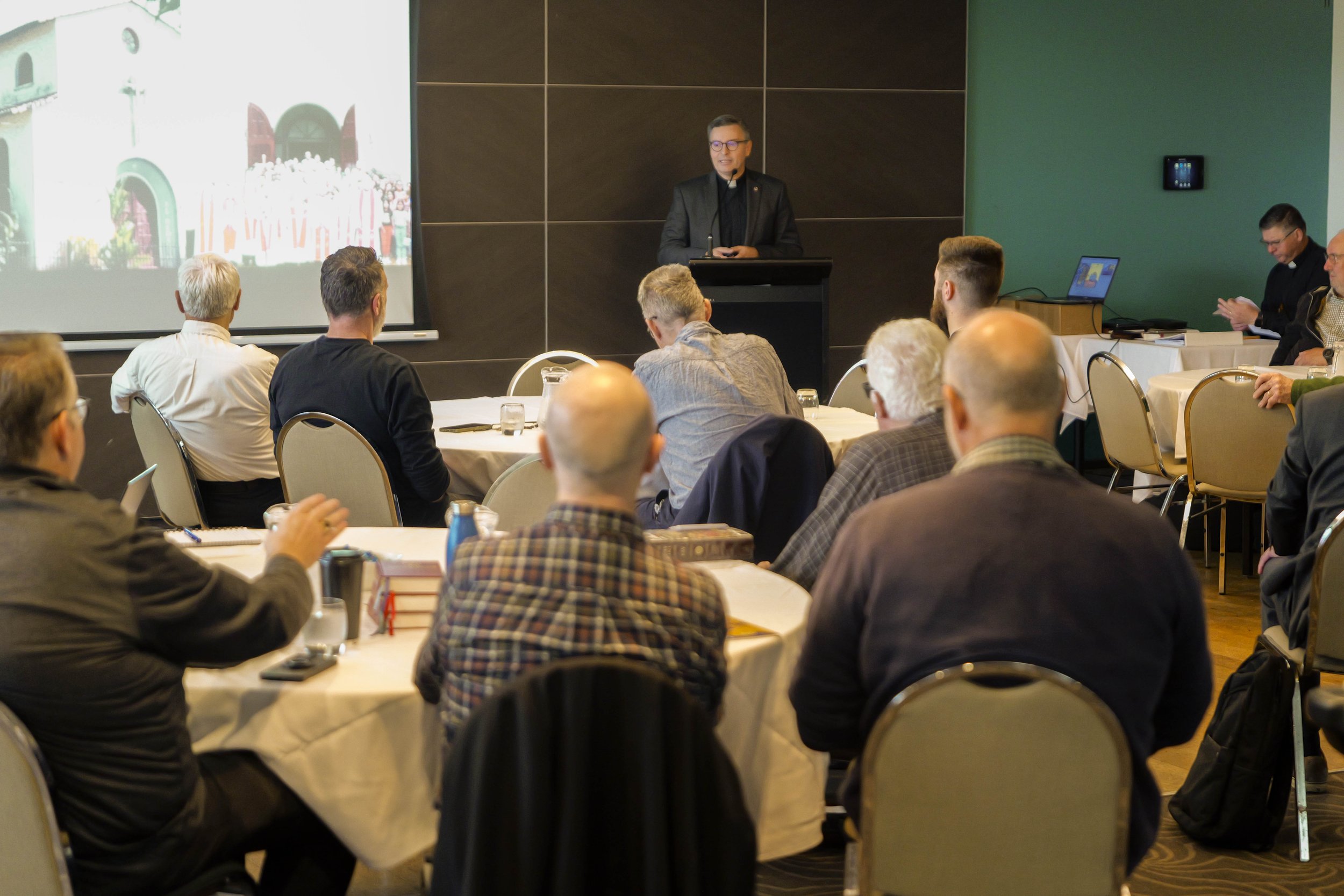
It was against this background that the Pastors’ Conference planning committee invited Dr Arthur Rickman to present on church planting at the recent conference in Warrnambool. Dr Rickman is currently living in Panama with his family where they serve the LCMS mission in Latin America. His mission work has given him extensive experience in planting churches in various places around the world, and he generously shared from his wealth of knowledge to both encourage and equip LM-A pastors for their ongoing work in this area.
Dr Rickman’s presentation was entitled ‘Confessional Lutheran Mission and Church Planting’ and he offered insights over four sessions. The topic headings for these sessions give a good idea of the content: Christ Builds His church; Planting Without Panic; Beyond One Generation; and A Royal Priesthood: Every Baptized Believer in the World of Mission. In his presentations, Dr Rickman encouraged the pastors with a mixture of practical wisdom, Lutheran theological insights into church planting, and words of encouragement for those who are engaging in planting churches.
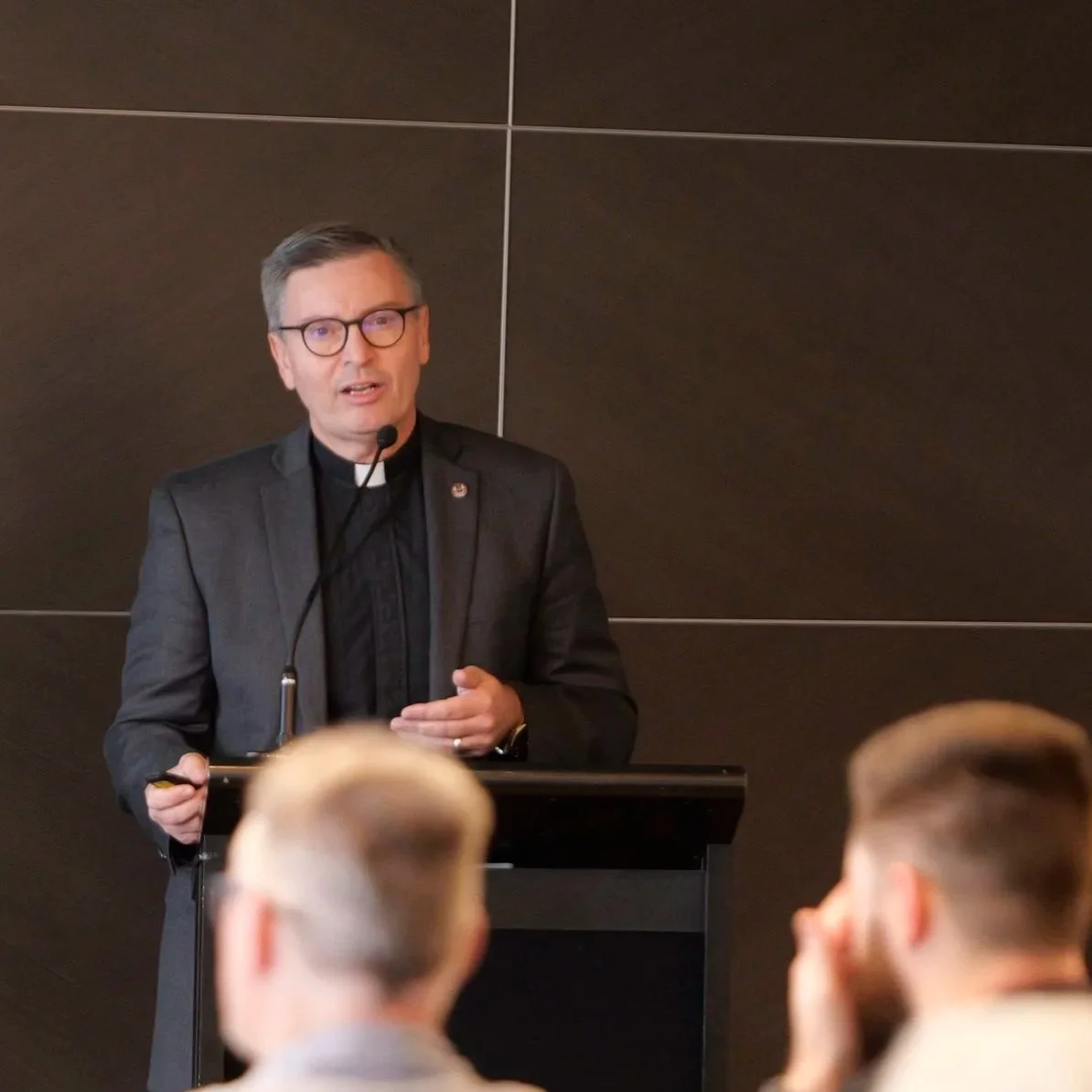
The practical wisdom that Dr Rickman shared was not necessarily new to many of the pastors. For example, he emphasised the importance of following up with visitors and the respective roles of the whole church, pastors and laity alike, in the life and mission of the church. He also emphasised the practical nature of mission work, such as getting to know your people well, visiting often, and seeking opportunities to encourage people and use their gifts to the glory of God. It was good to receive a reminder of these things. There is a lot of common sense in this teaching, but these basic elements of Christian mission are becoming increasingly rare, and it was good for us to be reminded of their importance.
Likewise, it was good to be reminded that Christ is the Lord of the church, and the work that we do is ultimately his. We are workers in the harvest, but Christ is the Lord of the harvest. Sometimes, we can get too caught up in the work that we are doing in the mission of the church, that we overlook the fact that the mission is God’s all along.
The implications of this are quite profound. As Dr Rickman reminded the pastors:
The Church does not exist for herself but participates in the mission of the Triune God. Christ Himself builds His Church through the faithful proclamation of His Word and the administration of His Sacraments. Our task is not to invent new methods to grow the Church but to faithfully steward the Means of Grace while engaging communities God has put before us.
Our job is to sow the seeds; but the Triune God brings the growth and the increase.
Of course, since God is the Lord of the Harvest, he is going to work through our missionary efforts in His time and in His way according to His wisdom. This means that there are many times when Christians in mission will grow disheartened. We need to focus on what God promises to do, and not on what we expect Him to be doing. Our human hearts want a predictable formula: we want to be told the things we need to do, and the specific steps we need to take so that God will bring the growth in consistent and predictable ways.
But the truth is God has never worked like this. Throughout the mission of the church, God has demonstrated his desire to work uniquely in different places. This is what he is going to keep on doing. For this reason, Dr Rickman warned pastors to be wary of models and formulaic approaches, but instead to trust the gifts that God has already given the church, such as the liturgy and the catechism.
At the same time, it’s important for church planters to be mindful of the context they are working in and the unique circumstances and cultural considerations that this context brings. We need to walk alongside the people God has called us to serve, to listen to them with an open heart and a willingness to learn.
Dr Rickman exhorted pastors to focus on teaching people, to never neglect doctrine, to be willing to nurture them in discipleship, to intentionally work to develop culture and values that reflect the gospel of Christ. He summarised this approach by saying: spread the Gospel; plant Lutheran churches; show mercy.
This three-fold summary is helpful in defining what Christian mission actually is. Many Christians have come to see the third point - showing mercy - as the essential element in Christian mission. We send money to some place far away where they use it to do good things like establishing schools, hospitals, or orphanages. Rickman acknowledges that acts of mercy are important as we show the love of Christ in actions as well as words. In cases of extreme poverty, it is essential to deal with peoples’ pressing physical needs, healing the sick, feeding the hungry and clothing the naked, before they will be able to hear the message of the gospel clearly. Jesus himself does this in his ministry.
However, acts of mercy should not be divorced from the clear proclamation of the gospel. When we heal the sick, we point to the greater healing that Jesus works when he sheds his blood on the cross to deliver us from sin and death. When we feed the hungry, we recognise that their deeper spiritual hunger can only be satisfied by the proclamation of the Word. When we clothe the naked, we long for them to be clothed also with Christ’s robes of righteousness in Holy Baptism.
The proclamation of the gospel is not just something that needs to be done in far-off places, but it also needs to be done in our own neighbourhoods, workplaces, schools and families. Thank God that this is precisely the kind of work He is doing right here among us, week after week in our congregations, as the Holy Spirit gathers the people of God to hear the Word faithfully preached, and the Sacraments rightly administered. We are in a mission field right here, and God is faithfully at work bringing people to faith and new life through the ministry of His church.
One aspect of church planting that I was not aware is that it can take up to 75 years for mission work to become firmly established. Dr Rickman explained that he did not share this statistic to make us despondent, but to help us realise that when the church engages in mission work it needs to see it as a long-term, multi-generational proposition. He said, all too often churches will jump into mission work, and pull out again after 20 years only to see it all collapse. It is important for LM-A to realise that the work we are doing now will only be fully realised in future generations. We need to keep faithfully working now, without expecting to see the fruit of our labour. Dr Rickmann shared many examples of LCMS missionary work from the first half of the 20th century that is now flourishing after 70+ years of careful and consistent nurturing. Mission is a long game, and we need to be realistic about this.
I am grateful for Dr Rickman’s helpful and insightful presentation. He gave LM-A pastors a great deal to consider as we face the reality of what it means to be a mission church with a focus on church planting. And yet, it was affirming to be reminded that the work we are doing is God’s work, and He will faithfully bless it. Our place is not to worry, but to keep serving our Lord faithfully in the harvest field he has sent us to labour in.
To God be all glory. Amen.
Pastor Matthias Prenzler
Vice President, Lutheran Mission - Australia