
Sowing Seeds for the Kingdom
“I will open my mouth in parables; I will utter what has been hidden since the foundation of the world.” Matthew 13:35
Over the next three Sundays, we will be hearing from Matthew 13. In this chapter, Jesus tells the crowds parables while sitting in a boat on the sea of Galilee. In Maths class you may have learned about “parabolas,” the arcs which objects follow when thrown through the air, but Jesus tells “parables” – stories which are thrown alongside something else as a comparison. Like a fisherman casting his line, Jesus throws out everyday pictures to catch something hidden deeper under the surface (Matthew 13:35). But this begs the question – why are the truths of God hidden in the first place? Why does Jesus need to say everything in parables?
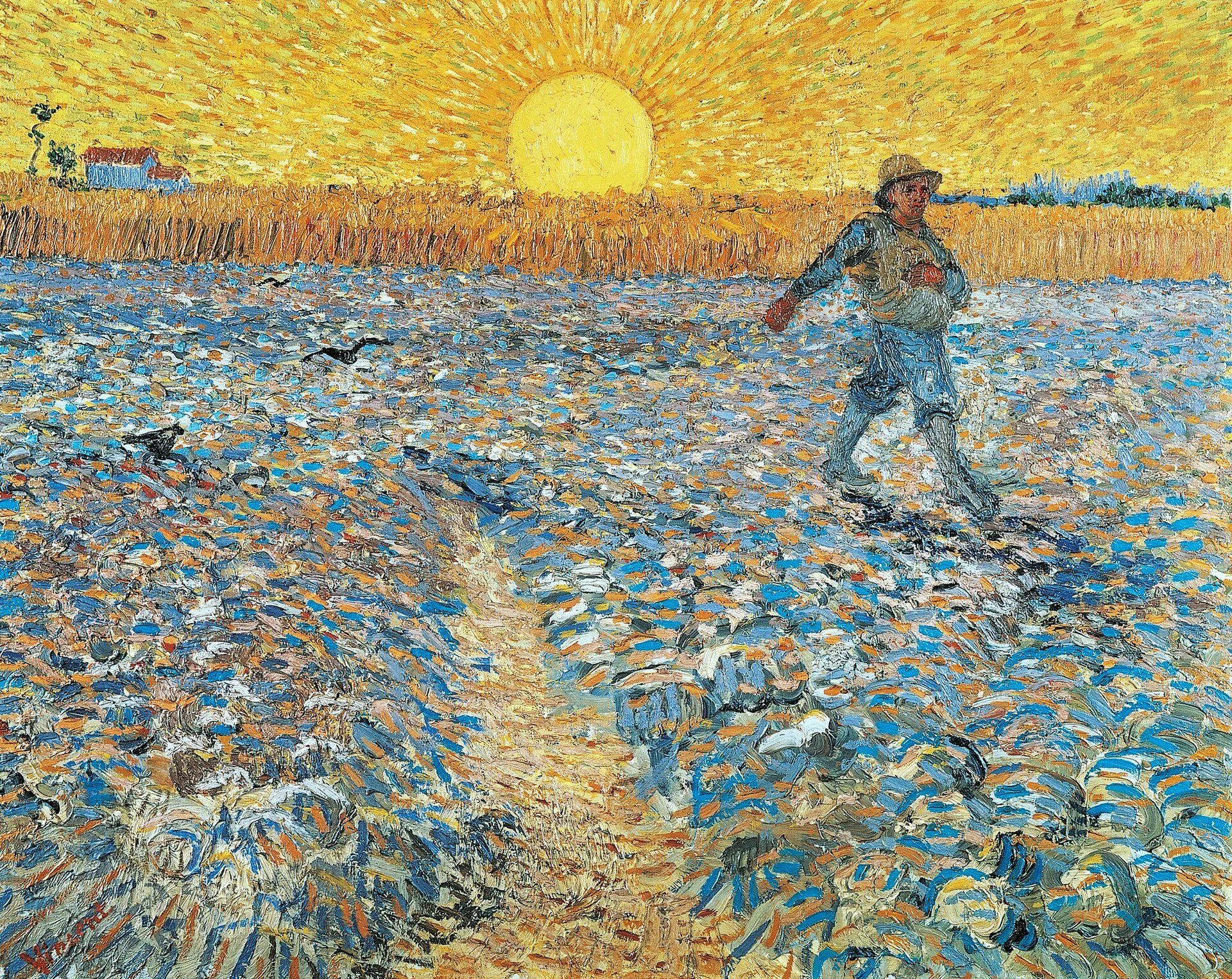
The Parable of the Sower answers this question. The Sower sows the seed, the Word of God, but for three kinds of people, it doesn’t produce its desired effect. Why not? The first is what we might expect – people hear the word and don’t understand it. You would think that perhaps this wouldn’t be a problem if Jesus hadn’t disguised his teaching in riddles, but you’d be wrong. The disciples solve Jesus’ riddle in a way that has nothing do with intelligence. They just ask! They ask, and Jesus freely gives an explanation.
Why don’t we think to do that? Perhaps it is because the heart of our problem is not our brain but our heart! The sinful heart is dull, uninterested and unwilling to learn. That is why our eyes are shut and our ears are deaf to God’s Word. We faithlessly give up when life gets hard, and when life is easy, we become distracted by our own selfish desires. Those are the two other types of soil, which have nothing to do with our intelligence but everything to do with our sinful hearts. We may know what God desires, but when we are put to the test, our true thoughts, beliefs and desires are revealed.
As he explains in Matthew 13:10-15, Jesus purposely makes his teaching more difficult to understand, because he is trying to show us that we do not understand. We think we understand him, but we do not. If we did understand, then we would bear fruit! But Jesus uses parables to push us to the point where we no longer rely on our own understanding but on his. He wants us to stop looking to ourselves for the answer and instead to look to him. To the disciples who turned to Jesus in their ignorance and asked Him to explain everything, Jesus says, “Blessed are your eyes, for they see, and your ears, for they hear!” (Matthew 13:16). Even before the parable is explained to them, Jesus blesses them because they have already been healed of their stubborn hearts. They have opened their eyes in faith, looking to Jesus for their solution. Their total reliance on Jesus reveals them as the good soil, which is ripe to receive the seed of God’s Word and bear fruit.
Jesus tells this parable for the sake of those who have ears to hear it. Even if we have been blessed with ears to hear and believing hearts, we will still find sin in our hearts drawing us away. When this happens, the Christian is once again saved only by looking to Jesus.
When I see a certain sin becoming a pattern in my life, I find that this parable helps me locate the source of the problem. Do I fail because I am foolish and do not understand what I am being asked to do? If that is the case, I must look to Jesus, who is my Teacher and the Wisdom of God. Is it because I am a coward who loses hope when life become difficult? Then I must look to Jesus, who is the Fountain of life and my Shield in every trial. Is it because I am distracted and lack the self-control to carry out my duties? Then I must look to Jesus my King and my Shepherd, who breaks down every idol and rescues me from every snare. In any case, I must look to Jesus who daily and abundantly forgives my sins and the sins of all believers.
Farmers are always at work cultivating their soil. After every harvest, the soil needs to be ploughed once again. As long as the lies of the devil, the hardships of the world, and the desires of our flesh are threatening to ruin the harvest, we need to hear this parable again and again. And so, we give thanks, in this short season of parables, that the Sower is once again going out to sow. Let those who have ears to hear, hear!
Thomas Krahling, Pastoral Student