
The Good Confession
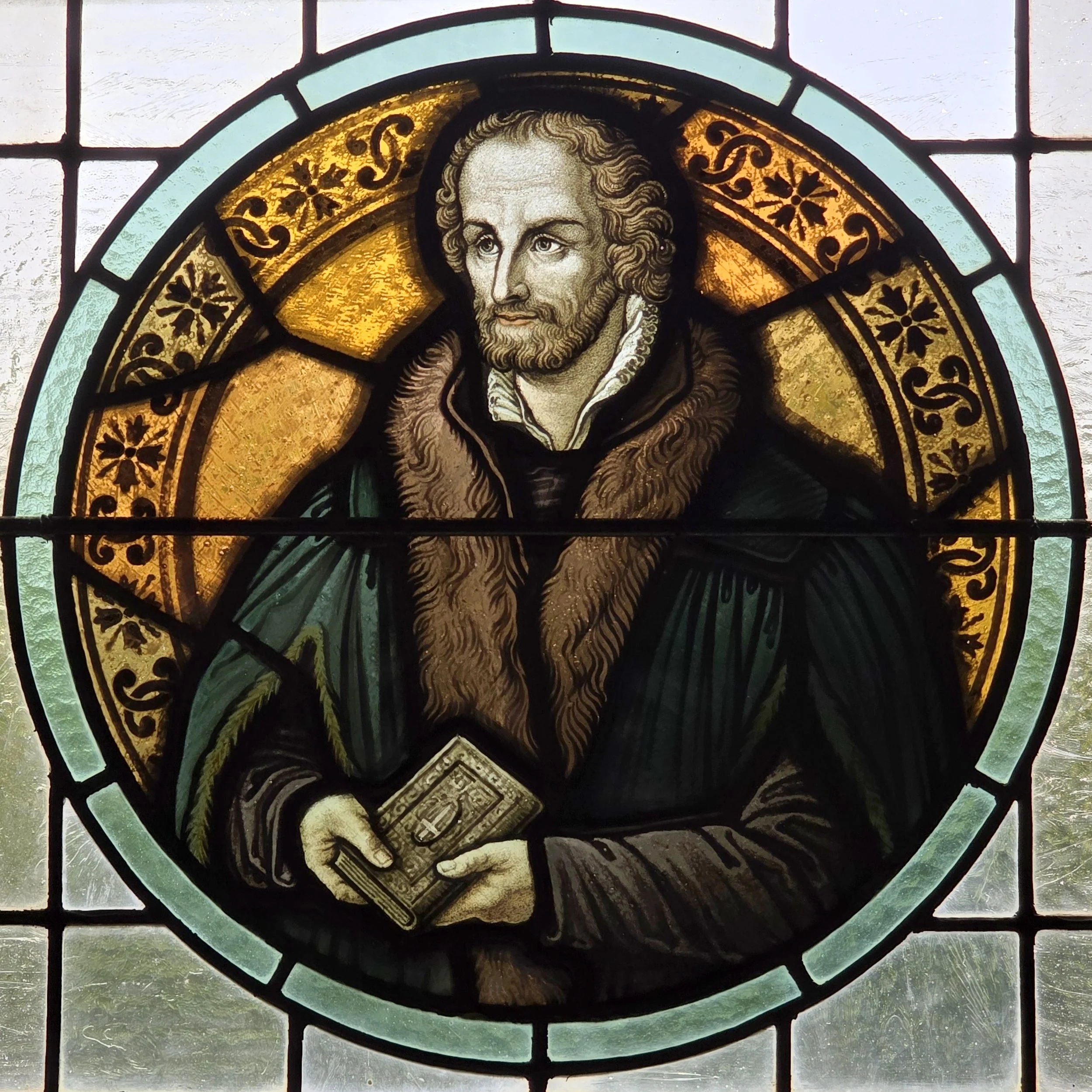
… so shall my word be that goes out from my mouth;
it shall not return to me empty, but it shall accomplish that which I purpose,
and shall succeed in the thing for which I sent it.Isaiah 55:11
Our churches teach that the Word, that is, the Son of God [John 1:14], assumed the human nature in the womb of the Blessed Virgin Mary (AC III).
[Our churches] teach that men cannot be justified before God by their own strength, merits, or works, but are freely justified for Christ's sake, through faith, when they believe that they are received into favour, and that their sins are forgiven for Christ's sake, who, by His death, has made satisfaction for our sins. This faith God imputes for righteousness in His sight. Rom. 3 and 4 (AC IV).
When Martin Luther posted his 95 Theses to the Castle Church door in Wittenberg in 1517, he started a reformation that had far reaching ramifications. Historians and commentators have highlighted the many political, educational, and social changes that took place in and around the Reformation. New technologies such as the Gutenberg Press enabled the work of Luther and early reformers to be spread quickly and effectively. (Just imagine Luther with a laptop and the internet!)
As we commemorate the presentation of the Augsburg Confession on 25 June 1530, we reflect on the good confession the reformers made, giving clear reasons for the hope they held in Christ Jesus and correcting the abuses they saw corrupting the church of the time.
What may be overlooked or diminished is that always at the heart of the Reformation was the work of Jesus Christ and his death on the cross that all people may be saved. The primary work of the Reformation was the proclamation of the Gospel so people might repent of their sins, receive the forgiveness of sins, then the crown of righteousness (2 Timothy 4:8).
Today many people speak of being spiritual but not religious, or some variation on that theme. We hear it from movie and music stars, and this may be mimicked by your friends and family also. It suggests a keen desire to chart one’s own course, but to have a mystical someone or something to fall back on if things get difficult.
Against worldly thinking, Isaiah sounds a clear warning; ‘seek the Lord while he may be found, call upon him while he is near’ (Isaiah 55:6). The living Word is incarnate through the person of Jesus Christ. We have ready access to Jesus through His Word and through the sacraments. In baptism we are joined with Jesus into the one true and apostolic church, the family of God. Through Holy Communion we receive the true body and blood of Jesus which we carry into the lives of our family and friends. This is our faithful witness.
Should we despise God’s Word, we are pushing Jesus away from us. We do this whenever we pay more attention to the devil’s question, ‘Did God really say…?’ When the voices of the world carry more weight than the clear Word of God, Jesus becomes hidden and far away from where we are.
Isaiah follows this warning with a call to repentance,
let the wicked forsake his way,
and the unrighteous man his thoughts;
let him return to the Lord, that he may have compassion on him,
and to our God, for he will abundantly pardon. (Isaiah 55:7 ).
God’s prophets, apostles, and pastors have always called people back from their sinful ways so they may receive grace and forgiveness from God.
Such graceful forgiveness doesn’t happen because we wish it were so, or because we want it really badly. It comes through the Word, preached in season and out of season (2 Timothy 4:2). It comes through hearing and reading the Word so we may know the voice of Jesus who lays down his life for his sheep as the Good Shepherd (John 10:11-18).
The Reformation was a major event in world history and in the life of the Church. Its goal was not to be proven right or wrong, that is for God alone to judge. At its heart was a faithful witness to God’s Word and the power of that Word to effect great change in the hearts and life of all who seek the Lord from where He readily gives Himself.
Lutheran Mission – Australia stands in this tradition of faithful witness, believing God’s Word as Isaiah records, ‘so shall my word be that goes out from my mouth; it shall not return to me empty, but it shall not return to me empty, but it shall accomplish that which I purpose, and shall succeed in the thing for which I sent it’ (Isaiah 55:11).
Heavenly Father, thank you for the gift of your Word through which we can know Jesus and through the work of the Holy Spirit receive the gift of eternal life. Give us strength and confidence to continue giving witness to your saving grace. Amen.
In Christian service,
Pastor Mathew Ker
Vice President, LM-A