
Service for the sake of the body
I therefore, a prisoner for the Lord, urge you to walk in a manner worthy of the calling to which you have been called, with all humility and gentleness, with patience, bearing with one another in love, eager to maintain the unity of the Spirit in the bond of peace. There is one body and one Spirit—just as you were called to the one hope that belongs to your call— one Lord, one faith, one baptism, one God and Father of all, who is over all and through all and in all. But grace was given to each one of us according to the measure of Christ’s gift…
And he gave the apostles, the prophets, the evangelists, the shepherds and teachers, to equip the saints for the work of ministry, for building up the body of Christ.
Ephesians 4: 1-7, 11–12
One of the saddest things I observed in the decades-long debate over the ordination of women was the message it sent to women (and lay men) who wanted to serve in the church. It implied that unless you serve as a pastor, your service is somehow second-class; that if you’re not ‘up the front’, your service isn’t seen or appreciated; that only pastors have ‘real power’.
How far from the truth those (mis)understandings are! As we see in Ephesians 4, all Christians have been called into Christ’s body, the church (v4); all have equal value by virtue of their baptism (v5); and all have been given gifts to build up the body (v7). Having said that, not everyone’s the same - we’ve all been given different gifts. If that weren’t the case, how could the body function (see also 1 Corinthians 12:12-31)?
Yes, the office of pastor is an important part of the body. Without pastors a church wouldn’t function well. But it wouldn’t function well without all the other faithful Christians contributing their diverse gifts to the building up of the body either. And despite what some might think, the office of pastor isn’t one of power, but of service. There’s only one head in the body of Christ and that is Christ (v15)! Just as our Lord is a king who serves, those whom He calls to positions of responsibility are to serve everyone else (Mark 10:43-45).
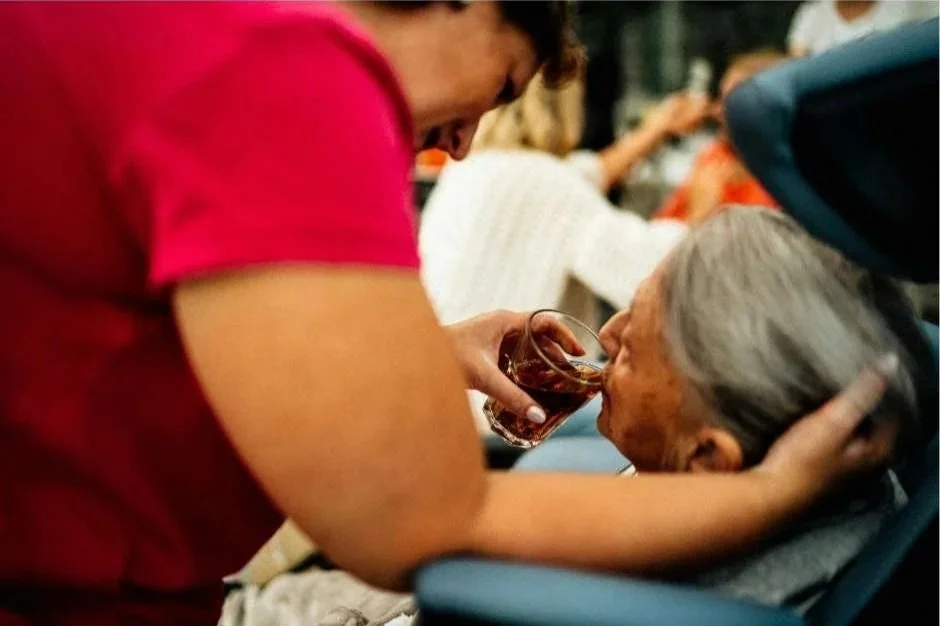
Since the establishment of the church in Jerusalem, it’s been recognised that certain members of the body of Christ are gifted in works of mercy. These deacons/deaconesses (from the Greek word diakonos, meaning servant - see e.g. Acts 6 and Romans 16:1-2) serve alongside, not in place of, pastors. They ‘serve tables’ (Acts 6:2) so that pastors can devote themselves ‘to prayer and to the ministry of the word’ (Acts 6:4).
While LM-A still needs to decide if it will institute a formal auxiliary office for male deacons, the College of Pastors has unanimously endorsed a theological paper that reaffirms the biblical practice of appointing suitably-qualified women to be deaconesses. As the paper explains, deaconesses are not ‘pastors in training’, but gifted members of the church who serve to help ‘the body grow so that it builds itself up in love’ (Ephesians 4:16). Please pray that God might bless LM-A with many gifted women willing to serve as deaconesses in our church:
Heavenly Father,
We thank you for all your faithful servants, both women and men, willing to serve in your church. Today we especially thank you for Deaconess Kathleen and her willingness to join our new Seminary, LTS-A, to train the next generation of church servants. Bless all women considering your call to study, and give them confidence to follow that calling wherever it may lead according to your will. Bless LM-A with many diakonoi, that we might bring your love and mercy to a world that so badly needs it.
We pray in Jesus’ name, Amen.
Pastor Michael Prenzler
Interim Principal
Lutheran Theological Seminary - Australia