
Help in our helplessness
Our help is in the name of the Lord, who made heaven and earth
Psalm 124:8
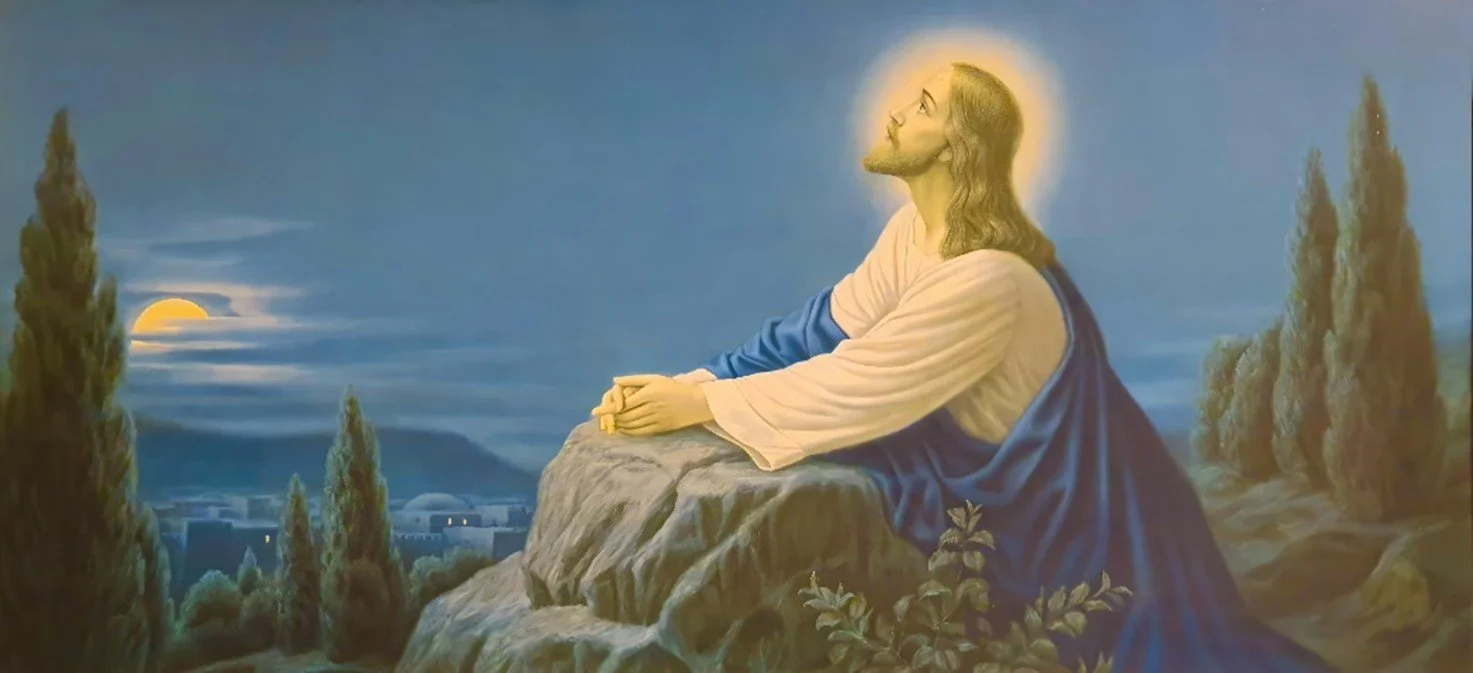
The painting of Jesus praying in the Garden of Gethsemane captures his focus on the Father. In perfect faithfulness, he willingly became the helpless one - arrested, beaten, and crucified. His agony was real. He knew his blood would be shed in place of ours. His sweat fell like drops of blood as he prayed, ‘Not my will, but yours, be done’ (Luke 22:42). In His suffering and death, he restored our connection to the Father, so that our attention might turn away from ourselves - from our sin, our efforts, our striving - and toward living as faithful children in the presence of our Heavenly Father.
Before God we are helpless. Our sin has caused a lack of fear, love, and trust in God. Like Adam and Eve, we turn from him, forget his help, and attempt to help ourselves. Yet from the beginning God created us for relationship and mutual faithfulness. Eve was given to Adam as a helper, but in the moment of temptation neither helped the other remain faithful. They turned from God, hid from him, and their will - and ours ever since - set itself against God.
We still have freedom in everyday matters. We can help ourselves to what’s in the fridge or the pantry. But when it comes to saving ourselves from death, we are utterly helpless. We cannot stop the ‘conveyor belt’ of this world that carries us to the grave. We cannot make ourselves holy, prevent ourselves from hurting others or being hurt, nor can we escape death. Deep down, humanity knows what Scripture and the Lutheran Confessions affirm: the human will is bound by sin and death.
Recognising our helplessness, however, does not stop temptation. We are tempted to minimise our sin: ‘I’m not that bad. I’m better than others.’ We are tempted to believe that politeness, positivity, or good manners can substitute for repentance. But Jesus says, ‘There is joy before the angels of God over one sinner who repents’ (Luke 15:10). Heaven rejoices over repentance, not respectable disobedience. The opposite temptation - despairing in our helplessness and refusing God’s help – is just as dangerous. Self-pity is no more faithful than self-righteousness. So, what turns us from both pride and despair? How is the curse of Eden reversed?
Each Sunday at the beginning of the Divine Service we acknowledge our helplessness during Confession and Absolution. In the name of the Triune God, through baptism into Christ’s death and resurrection, we are enabled to confess our helplessness without fear of punishment. We pray, Almighty God, merciful Father, I, a poor helpless sinner, confess to you all my sins and repent of all the evil I have done.’ Our sins reveal not only our actions but our condition. Even if we could stop doing wrong, we would still be helpless before God. Pleasing him is not about behaviour modification but about the healing of our sinful nature and the restoration of our relationship with him. Our help comes only in the name of the Lord.
Each Sunday in the Divine Service, heaven meets earth. It is the place where God reconnects himself to humanity. Sinners separated from him since Eden. Here, through His absolution, His word and His body and blood, Christ gives us the help we cannot give ourselves.
The good news is that Jesus has not left us to help ourselves. If finding and following him depended on our own effort, we would remain helpless and harassed. After feeding the five thousand, Jesus taught that true life comes from the Spirit: “It is the Spirit who gives life; the flesh is no help at all” (John 6:63). Jesus, the Word made flesh, gives us his Word, and through that Word he gives us the Holy Spirit. Just as the Spirit descended on Jesus at his baptism, the Spirit is given to us in our baptism to continually draw us to Christ. Jesus set aside his divinity to become the Son of Man. We, through the Spirit, set aside our sinful humanity and are made children of God. The Spirit helps us abandon the desire to be ‘like God’ through our own works, just as Adam and Eve once desired.
In his ascension, Jesus did not leave us to find our own way to the Father. He did not leave us without identity. Through his helplessness on the cross, we receive our identity as God’s children, able to bear our crosses in hope of the resurrection.
On the night he was betrayed, Jesus promised his disciples - and all who hear his Word - ‘If you love me, you will keep my commandments’ (John 14:15). But how can we keep them? Jesus immediately answers: ‘I will ask the Father, and he will give you another Helper… the Spirit of truth… You know him, for he dwells with you and will be in you’ (John 14:16–17).
We have just celebrated the day of Pentecost when the Holy Spirit was given to all believers, as our helper, our 'paraklete'. Therefore, as we allow the Spirit to work within us - just as Jesus prayed in trust before his death - we too can pray with confidence, ‘The Lord is my helper; I will not fear; what can man do to me?’ (Hebrews 13:6, Psalm 118:6).
Revive your work, O Lord:
Give Pentecostal showers:
The glory shall be all your own,
The blessing, Lord, be ours. (LH 229)
Pastor Heath Pukallus