
Book Review: From Shame to Glory: God’s Remedy for the Burden of Injustice and Failure by Dr John W Kleinig
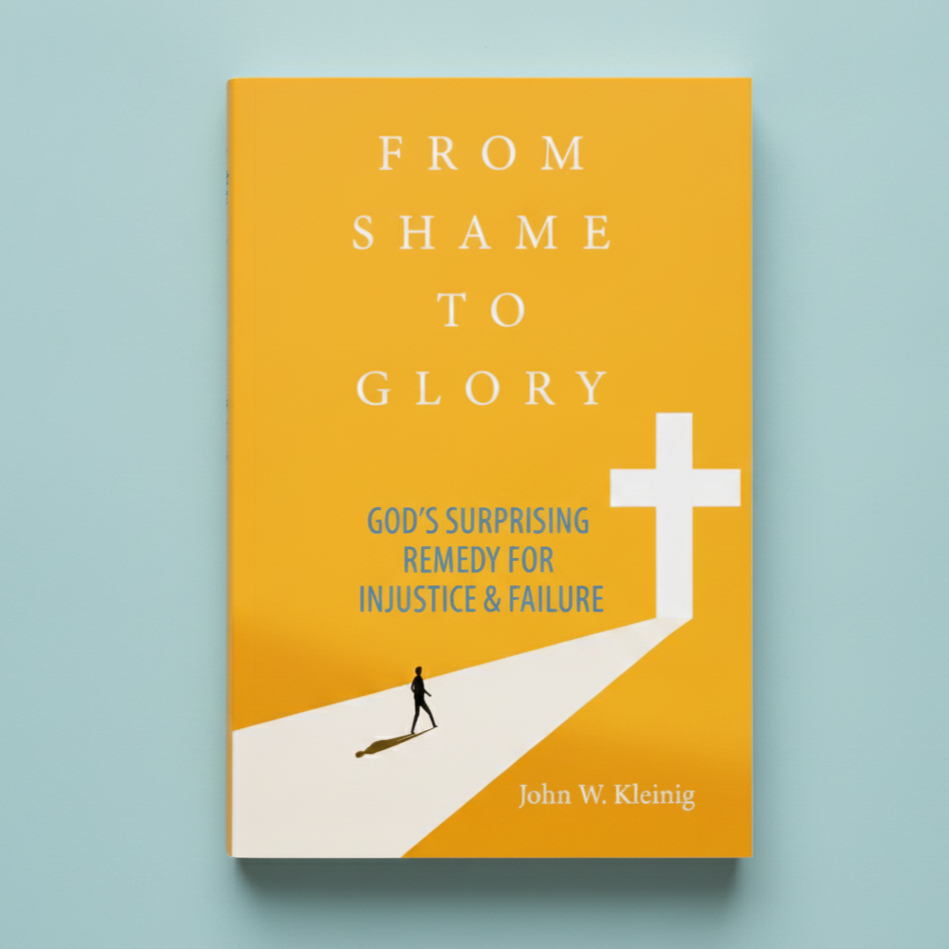
This review is part of the ‘Good Books’ series we are running over the coming months highlighting wonderful books which share God’s wisdom.
“From Shame to Glory” is a bold title. It might make a prospective reader think of the kind of spiritual self-help literature that is so prolific today, promising the Christian ways to overcome their own shame through perfecting certain spiritual techniques or practices.
Kleinig’s book could not be further from this! It is a biblical account of how God removes human shame and puts in its place not just honor or self-esteem, but His very own heavenly glory.
Like many, over the years I have struggled with pinning down what exactly shame is and how it works. Its exact nature is elusive and it seems to operate in complex ways. Our culture has scaled it down to just another kind of victimhood. It is popularly believed that if we have a healthy self-image and we are otherwise well adjusted, we should feel no shame, nor be shamed by others. It has been reduced to “bad feelings about yourself which others put on you”. There is much more to it than this.
In chapter 2 Kleinig sets about naming shame, getting at what it is and how it works. He explores the personal emotions and feelings associated with shame, and its cultural and social dimensions. He agrees with the basic and widely held distinction that guilt, while so often deeply entwined with shame, is nevertheless distinctly different from it. Guilt is related to our wrong actions and words; shame is related to our wrong being, our damaged identity. However, shame is best and most clearly understood not just as a purely internal emotional experience of the individual, but also as external and intrinsically associated with our relationships, both to God and other humans. The picture of shame sketched in this chapter is deepened and sharpened by the chapters that follow later.
The core of this work is the careful and detailed biblical survey provided in chapters 2-5. As the story is explored, shame’s complex spiritual layers unfold, through Scripture’s characters and events. Kleinig moves methodically through the Old Testament origins of shame in the fall (Gen 3). and the comprehensive spiritual, physical and other personal consequences of shame in the generations of Israel. He continues with a penetrating New Testament analysis of the Second Adam whose ministry redeems and removes the shame of those who believe in him. Kleinig works methodically through the narrative, piece by piece, finally focusing in on its Christological heart:
God sent His Son to rescue people from shame through His shameful death on the cross. Jesus goes the way of the cross, the way of divine folly rather than human wisdom, the way of divine weakness rather than human power, the way of divine lowliness rather than human glory. Through the death of Son on the cross, God debunks the human quest for fame. He deliberately chooses those who are regarded as nobodies in human society and calls them to follow His Son, on the way by which He leads them through shame to glory. He makes Christ everything for those who are otherwise regarded as worthless and insignificant. He unites them with His crucified and risen Son so that they are vindicated by Him with His righteousness, and made holy by Him with His holiness, and delivered from shame by Him, as their Redeemer (page 105).
In this biblical exploration and in other parts of the book, Kleinig treats the special significance of sexuality and shame. Shame finds particularly strong purchase in our sexual identity. Adam and Eve, first created in all their sexual glory with male and female physicality, respond to their newfound shame following their disobedience by covering their nakedness. Their glory as man and woman became their shame. To this day we carry this wound with us. Sexual shaming is therefore especially devastating and long-lasting.
In this work Kleinig does not set up arbitrary categories or structures in order to explain shame. Nor does he simply adopt the categories and structures offered by psychology or neurology, though he does use terminology from this milieu when it is useful (where for example, he refers to shame’s affect on our identity). His main strategy is instead to allow the scriptural picture of shame to emerge in a natural and unforced way, as he describes and interprets it in relational rather than technical terms.
From a biblical and theological perspective, shame is a complex and many-sided reality. It operates both negatively and positively, according to different situational dynamics. It is the damage response we sinners have when the effects of sin and evil (our own or that of others) impact us. Though painful it may in some situations be appropriate and salutary. This why we speak about those who have no such sense as “shameless”, as if something were missing from their humanity.
Compared to the most influential and widely appreciated Christian book on shame in recent times, Curt Thompson’s TheSoul of Shame (2015), it is clear that Kleinig takes a far richer biblical view of shame and the Christian response to it. Thompson describes the neurological seat of shame in the brain and how the brain can be helped to greater self-acceptance through reframing the sufferer’s inner story, and cultivating loving relationships in Christian community. Kleinig’s book, on the other hand, is rooted in a consciously monergistic Lutheran theology. No amount of our cultivation and reframing can remove or heal shame, which is part of the fatal damage of our fallen state. While psychological therapy can be and is helpful in damage control, it cannot decisively deal with shame any more than it can deal with sin or death. Only God’s extra nos intervention can remove it, and has done so in the person of Christ, who faced the shame of the cross so that by faith in him we may not be put to shame.
It could be said that this book uncovers the authentic scriptural “theology of glory”, which does not bypass the theology of the cross but keeps it central. We need to face up to the experiences of shame that come to us in life, and we can do this because Jesus faced the shame of the cross, and through his suffering and death, wiped away the shame of all those who trust in him.
One of the many helpful spiritual insights Kleinig offers is the judgement that biblically, the true antidote to shame is not honor, self-worth, confidence or fame – the much sought after human solutions. God’s antidote is nothing less than glory. We were created to share in the weight of God’s glory, and when our shame is healed in Christ, we receive again that glory of God, hidden in this age, but revealed in eternity.
As with Kleinig’s approach to the Christian life in his other writings, so here he wants the reader to see that receiving God’s healing and release from shame is not a matter of just “knowing about it” or having some abstracted “concept” of it. It is an embodied, personal and relational experience which we receive, most especially in the Divine Service (chapter 6). Here God delivers his transforming gifts to us through his Word. In the ordo of the liturgy God performs His restoration of our shame-wounded souls, and gives us the gift that directly redeems our deep injury from the Fall, our shame over our exposed naked bodies. Jesus gives us his own body and blood, that hung naked in shame on the cross, but was raised and clothed in glory, to live eternally.
In chapter 7, Kleinig explores the power of gracious speech, in avoiding shaming others, in restoring others’ shame and sometimes, in gently allowing shame to do its necessary work in the heart and conscience. It is important for Christians to understand the subtle and nuanced dynamics of shaming and being shamed in the context of the church’s life, where we so often fail to understand the spiritual damage we do to one another. Kleinig spends significant space teaching on this issue, and brings out very helpful and often ignored insights about how shame and restoration operate in personal relationships.
There are poignant moments of self-disclosure in this deeply compelling book, which demonstrate the raw vulnerability of shame and its pain. It is written from a disposition of deep empathy, which elicits the reader’s personal reflection on their own experiences of shame, and also stimulates repentant consideration of the ease with which, even in the church, we unjustly and lovelessly shame one another.
John Kleinig’s prose is clear and accessible. Its style is reminiscent of his 2008 book, Grace Upon Grace in the way it uses simple uncomplicated sentences with active verbs, which help the reader quickly and easily understand what the author means. Kleinig skillfully draws together the shame-to-glory narrative of Scripture, placing Christ’s redemptive work at the center. It is theologically and pastorally rich even though it is delivered with a minimum of technical jargon. This is what makes this work, like many of John Kleinig’s others, helpful and important for academic and non-academic theologians alike.
Stephen Pietsch
June, 2026