
Love that doesn’t surrender
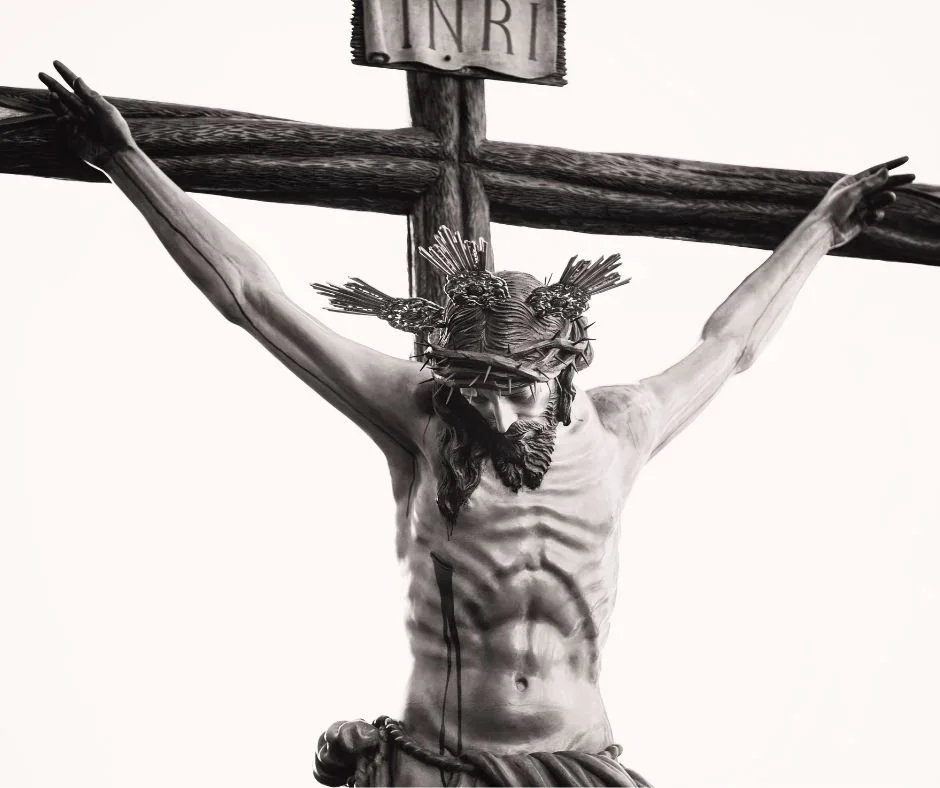
‘When Jesus had received the sour wine, he said, “It is finished,” and he bowed his head and gave up his spirit.’
John 19:30
Jesus’ sixth word from the cross is recorded in John 19:30: ‘When Jesus had received the sour wine, he said, “It is finished,” and he bowed his head and gave up his spirit.’
These words may initially sound like a cry of defeat. Spoken from the agony of the cross, they could be misunderstood as the final words of someone who has reached the limit of suffering and can endure no more. After all, Jesus had endured rejection from His own people, betrayal by one of His disciples, abandonment by many of His followers, brutal beating, mockery, and the excruciating pain of crucifixion. In such circumstances it might appear natural to hear in these words a sigh of surrender - a final capitulation to suffering and death.
Throughout His earthly ministry Jesus had borne the burdens of others. When He healed the sick, He entered into their suffering. When He forgave sinners, He took upon Himself their guilt and shame. When He raised the dead - such as the widow’s son (Luke 7:11-17), Jairus’ daughter (Mark 5:21-43, Luke 8:40-56) and Lazarus (John 11:1-44) - He confronted the very power of death itself. By the time He reached the cross, He had carried the full weight of humanity’s brokenness. It might seem possible that in that final moment the burden became too great and that His declaration meant He was waving the white flag of surrender.
Sometimes surrender can even be considered wise or courageous. A determined person might fight to the bitter end rather than admit defeat, but the truly wise warrior knows when a battle cannot be won. This raises the question: was Jesus surrendering when He said, “It is finished”? The King James Version says that He ‘gave up the ghost.’ So was Jesus finally conceding victory to death?
The answer is no. Jesus’ words are not a declaration of defeat but of completion. The statement “It is finished” (in the New Testament Greek Τετέλεσται, pronounced Te-tel-estai), proclaims that the work given to Him by the Father has been accomplished. Importantly, Jesus did not say, “I am finished,” but rather, “It is finished.” The mission entrusted to Him - the redemption of the world - had reached its fulfilment.
His death was not the tragic end of a failed revolutionary. Instead, it was the decisive moment in God’s plan of salvation. The prophet Isaiah had foretold a suffering servant who would bear the sins of many and make intercession for transgressors (Isaiah 53). On the cross Jesus fulfilled this prophecy. Though it appeared that the powers of sin, death, and evil had triumphed, His sacrifice was actually overturning those very powers and establishing reconciliation between God and humanity through a new covenant.
But how can we know that Jesus was not simply overcome by death? The answer is revealed most fully in the resurrection on Easter Sunday. Yet even in the account of His death there is an important clue. John writes that Jesus ‘bowed his head and gave up his spirit.’ The order of these actions is significant. Normally, when people die, they first lose their breath and strength, and only afterward does their head fall forward. With Jesus the sequence is reversed: He first bows His head, and then He gives up His spirit.
This detail suggests that Jesus was not overpowered by death. Instead, He willingly laid down His life. Earlier in His ministry He declared that He had authority to lay down His life and authority to take it up again (John 10:17-18) . Even while hanging on the cross, Jesus remained the Lord of life and death. His life was not taken from Him against His will; He freely gave it in obedience to His Father.
This act reflects the image Jesus Himself used when He spoke of being the Good Shepherd. A good shepherd lays down his life for the sheep (John 10:11). In the same way, Jesus willingly offered Himself for the salvation of the world. His death was not an accident or a failure but a deliberate and loving sacrifice.
Victory though it was, it was hidden beneath the appearance of defeat. To those watching at Golgotha, it looked like the end - a tragic loss, the destruction of hope. Yet beneath the veil of suffering and death something profound and glorious was taking place. God was accomplishing the redemption of humanity through the sacrifice of His Son.
Because Jesus has completed this work, there is nothing left for us to accomplish in order to earn God’s favour. We often feel the need to make ourselves worthy of God’s acceptance through our own efforts. But the message of the cross tells us that reconciliation with God has already been accomplished. When Jesus says, “It is finished,” He declares that everything necessary for our salvation has been done. Now there is the freedom to pursue those things that please Him - faith, prayer, charity, forgiving others, etc. - rather than those things being needed to somehow appease Him.
Therefore, these words are not a cry of resignation but a proclamation of victory. Jesus is not saying, ‘This is the best I could do,’ or ‘I give in.’ Instead, He is announcing that the battle against sin and evil has been won. Through His suffering and death, He has overcome the powers that enslave humanity.
The New Testament describes Jesus as the perfect High Priest who offered the final and complete sacrifice for sin. In the temple, priests continually stood as they performed their duties, offering sacrifices again and again. But after Jesus offered Himself once for all, He sat down at the right hand of God (Hebrews 10:12). His sitting down signifies that the work is finished. No further sacrifice is needed.
The sixth word from the cross stands as a declaration of triumph. What appeared to be defeat was actually the moment when God’s saving plan reached its fulfilment. In those three simple words - “It is finished,” Jesus proclaims that the work of redemption has been perfectly accomplished for the salvation of the world.
We pray:
We thank You Father for the saving work of Your Son. On the cross He bore the weight of our sin and the brokenness of the world, and with His final word He declared that the work of redemption was complete.
Teach us to trust in the finished work of Christ.
When we are burdened by guilt, remind us that our forgiveness has already been won.
When we try to make ourselves worthy, help us to rest in the grace that flows from the cross.
Lord Jesus, You did not surrender in defeat but gave Your life in love.
Help us to live each day in the light of Your victory over sin and death.
Strengthen our faith, deepen our gratitude, and shape our lives to reflect Your mercy and grace.
Holy Spirit, lead us to the cross again and again,
that we may see there the depth of God’s love for us
and find peace in the words, “It is finished.”
We pray this in the name of Jesus Christ,
our crucified and risen Lord.
Amen.