
Beginning with forgiveness
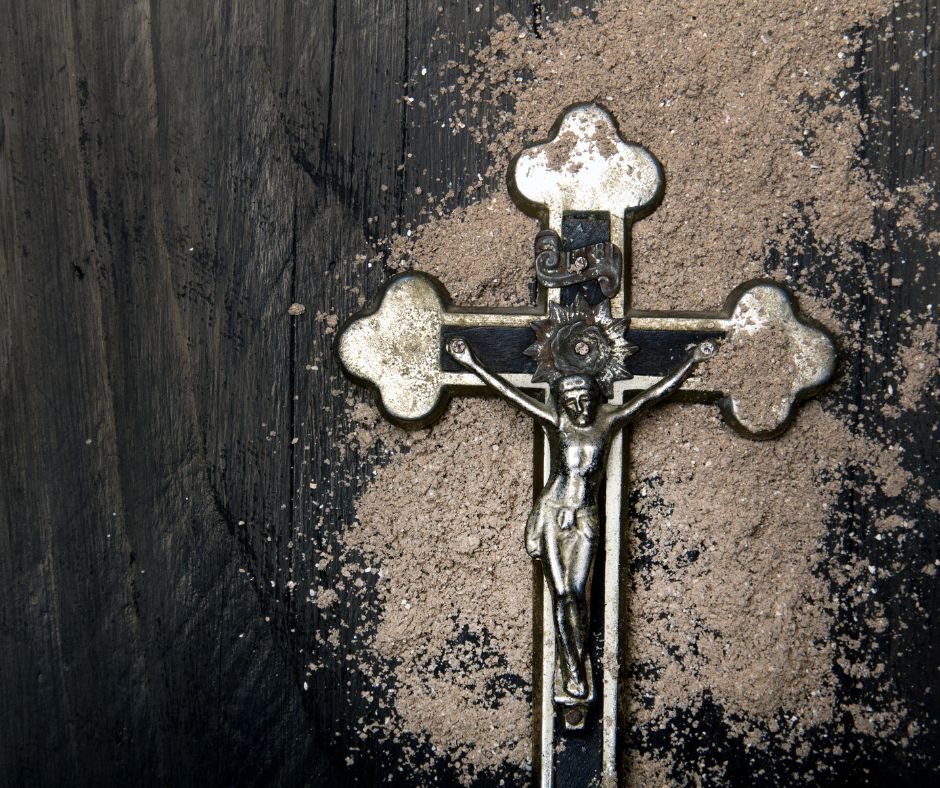
Father, forgive them, for they know not what they do.
Luke 23:34a
There was a soldier on sentry duty one moonless night. He surprised himself by getting the perfect shot at an enemy soldier who was coming toward him down a laneway. But when he went to examine the body, he discovered it was his best friend, a fellow soldier from another unit. He wasn't at all consoled by the well-meaning chaplain who said to him, ‘But you didn't know what you were doing.’
Because sin is so utterly sinful (Romans 7:13), the fact is that we do not always know what we are doing. But it’s never a valid excuse! Only the Scriptures as ‘a lamp for my feet, a light on my path’ (Psalm 119:105) reveal whether our actions and thoughts are in obedience or disobedience to the Word of Christ.
Pilate, the Jewish religious hierarchy, the raving mob, the Roman soldiers - how did each decide to crucify the Author of Life (Acts 3:15)? Did they know what they were really doing?
Was it that they were standing up for law and order?
Was it that they believed they were supporting good Biblical values?
Did they just have a gut-feeling?
Were they just obeying orders?
With nothing more than the day’s duty in view, they could each answer in their own way.
I don’t understand, so I wash my hands of it all!
He’s a blasphemer! How dare he besmirch our God?
It’s better that He dies, rather than putting the whole nation at risk!
I’m a soldier! I did my duty!
But with eternity in view - an eternity unseen, unnamed and unrecognized by almost everybody involved in the issuing and execution of the death sentence upon the Author of Life and Lord of glory – we, too, now stand there with them under the same just judgment, ‘You do not know what you are doing.’
What was it that Satan promised humanity in the Garden of Eden? It was knowing good and evil, that they would be like God. This would mean they could strive against God, trying to put themselves in His place. At Satan's invitation, humanity took, ate, and our eyes were opened. And what did we see? Ourselves, stripped naked! Our eyes were opened and we knew only one thing: we were naked and afraid. Our desire to know good and evil, to exalt ourselves, to be as gods in place of God, only exposed our vulnerability trying to live in denial of God, indeed the limit of our own creatureliness. God had created us in the divine image. To live without God (to redefine God’s limits) meant death to our creaturely existence which was created to be good.
In the First Word from the Cross we see that forgiveness comes first. It’s the bridge that only Jesus can construct towards us. If Jesus had to wait until we fully recognized the wrong that we did was so utterly wrong, then He would still be waiting! However, ‘While we were still sinners, Christ died for us’ (Romans 5:8).
St Augustine said that sometimes people in his church omitted the phrase from the Lord's Prayer that says, ‘and forgive us our sins as we forgive those who sin against us.’ They passed over that phrase silently because they knew they would be lying if they said it. They knew, said St Augustine, that in those words that they were making a kind of covenant with God. They knew that forgiveness is hard, costly and merciful.
When there is injustice, when we are wronged, we first get a lawyer and get even. We need restitution and compensation before we can forgive. But from the cross, Jesus pronounced the absolution, ‘Father, forgive,’ in order to bestow His own righteousness, innocence and blessedness to everyone who did not know what they were really doing.
Lord Jesus, we do not know what we are doing. Yet You know what You are doing. Teach us to live from Your forgiveness and to forgive as we have been forgiven. Amen.
Throughout Lent, the newsletter devotions will focus on the last seven Words of Christ from the cross.