
Priesthood and the Doctrine of Vocation
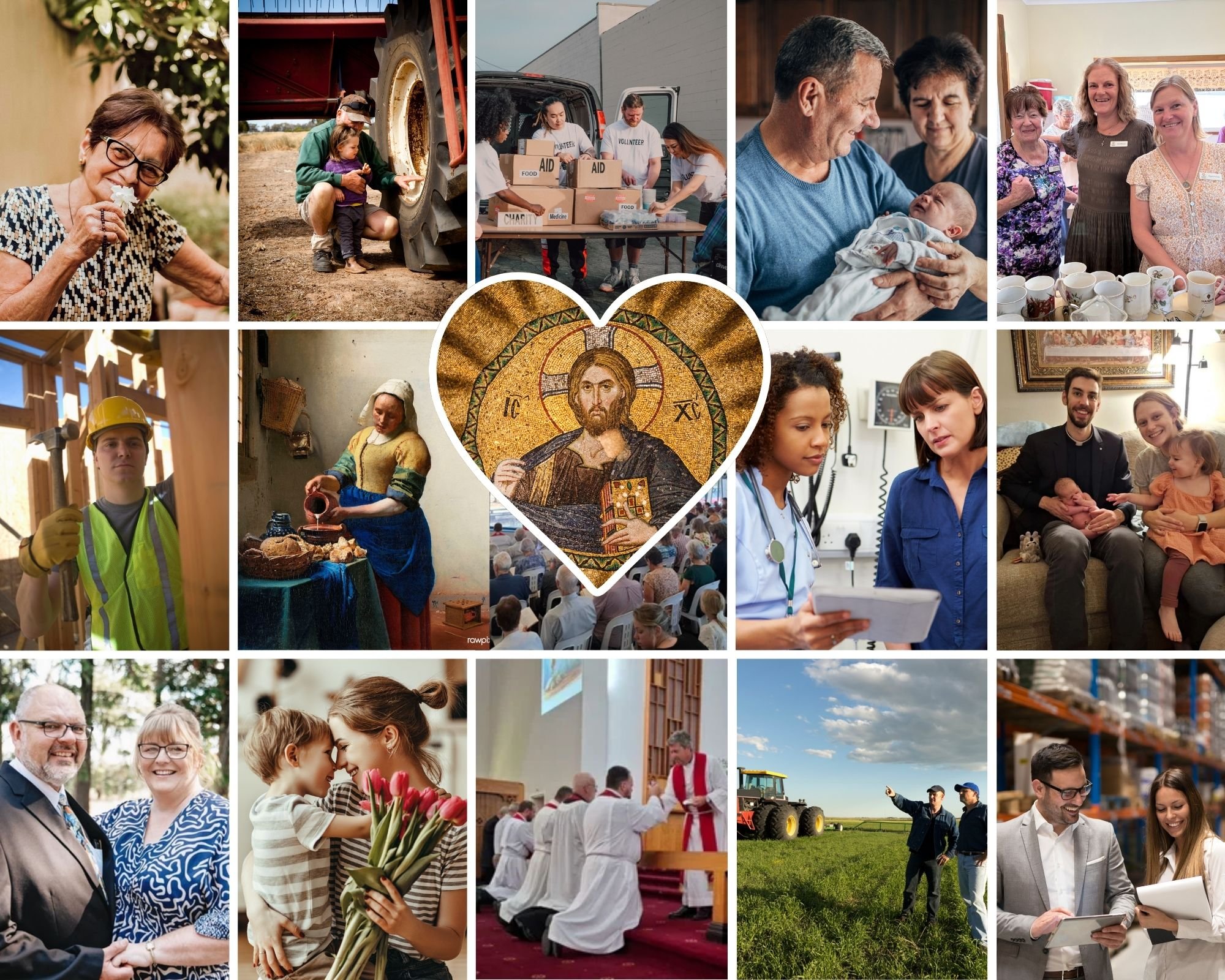
In this previously unpublished paper, Lutheran writer Dr Gene Veith, identifies the source of confusion in the contemporary church over the roles of pastors and laypeople. In many modern churches, the pastor acts more like a CEO of a company, supervising and managing the church, while the lay people fulfil all or most of the ministry activities. This disordering of roles within such churches stems from an ‘anti-church’ movement, which espouses ideas such as ‘everyone a minister’, and which ultimately leads to the belief that there is no need for pastors. This is evident in both the activities of ‘mega churches’ and in the increase in house or home churches.
Veith argues that at its heart, this mistaken belief stems at least in part from an improper understanding of the ‘priesthood of all believers’, and that the church could benefit from a better understanding of the doctrine of vocation, which rightly identifies and values the office of the holy ministry and the vocations of all believers.
This extract is taken from a longer paper. Readers are encouraged to download and read the full paper via the link at the end of this article.
Church without Pastors
Contemporary Christianity is afflicted with two mistakes about the vocations of pastors and laypeople. In one, the pastor lords it over his laypeople, exalting his vocation over theirs. This is evident in the megachurch pastor I interviewed, though this predilection can also be found in conservative churches. In the other misunderstanding, laypeople lord it over their pastors, exalting their vocations over his. Again, this can happen in the whole range of congregations. That contemporary Christianity, though, tends to be oblivious to the doctrine of vocation, however, heightens both tendencies.
[A] megachurch pastor I interviewed believes that all of his members are “ministers.” This assumption is stated explicitly in the slogan ‘everyone a minister’ and in church bulletins today that list as minister ‘everybody.’ The word ‘minister’ literally means ‘service,’ and all Christians indeed, as we shall see, are called to service. The implication here, however, is that ‘ministry’ consists of various kinds of church work. The pastor is the ‘leader,’ a commonly invoked term, and he may continue to do such things as ‘lead the worship service,’ but the spiritual ministry of the church, as such, should be carried out by the laypeople, his followers.
The theological justification for blurring the role of clergy and laity, of course, is the doctrine of the priesthood of all believers. We are now seeing, however, contemporary Christianity taking the next step. If there is no essential difference between clergy and laity, then churches do not need pastors at all…
The Doctrine of Vocation
The Lutheran doctrine of vocation (a Latinate term that means ‘calling’) describes how God works through human beings. Whereas the Reformed version emphasizes what we are to do in our different callings - and even the Lutheran version deals with the ‘duties’ of the various callings - the most important element of Luther’s understanding is that the different vocations are means through which God works.
The Office of the Holy Ministry
According to the Lutheran theology of the office of the holy ministry, God calls pastors and therefore works through them in the church. God proclaims His Word through the voice of the pastor. The Triune God baptizes as the pastor invokes His name and sprinkles the water. Christ distributes His Body and Blood through the hands of the pastor as he presides at the Holy Supper.
That Christ works through the pastor is evident in the Divine Service in the words of absolution:
Christ gave to his church the authority to forgive the sins of those who repent, and to declare to those who do not repent that their sins are not forgiven. Therefore, upon your confession, I, as a called and ordained servant of the word, announce the grace of God to all of you, and on behalf of my Lord Jesus Christ I forgive you all your sins, in the name of the Father and of the Son † and of the Holy Spirit.
Service with Holy Communion, The Lutheran Hymnal, p6
In these words, so confusing to non-Lutherans but so comforting in their tangible assurance to those who understand them, the pastor forgives sin. Not because he has the innate ability to do so, but because he is ‘called and ordained’; therefore, he can act ‘on behalf’ of Christ and, by His command, announce the grace of God to the sinner.
The Catechism explains in more detail how Christ works through His ‘called ministers’:
I believe that when the called ministers of Christ deal with us by His divine command, in particular when they exclude openly unrepentant sinners from the Christian congregation and absolve those who repent of their sins and want to do better, this is just as valid and certain, even in heaven, as if Christ our dear Lord dealt with us Himself. [1]
According to the Lutheran confessions, it is the calling that makes the pastor, a vocation externally extended and then publicly ratified in the rite of ordination. In the words of the Augsburg Confession, ‘Our churches teach that no one should publicly teach in the Church, or administer the Sacraments, without a rightly ordered call.’ [2] Christians can be confident that God Himself is serving them through the pastor whom He has called.
The vocations of all believers
And yet, what is said of the office of the holy ministry - that God distributes His gifts by means of human beings acting by virtue of a calling - applies also to all of the vocations. God creates new human beings through the vocation of mothers and fathers. God gives us our daily bread by means of farmers. God protects us by means of earthly magistrates. He heals through physicians and nurses; He bestows the benefit of education through teachers; He makes our lives easier through scientists and engineers; He creates beauty by means of artists and musicians.
This principle too is enshrined in the Lutheran confessions. Just as pastors function ‘in the stead’ of Christ, The Large Catechism teaches that young people ‘should think of their parents as standing in God’s place.’ [3] Through the civil government, says The Large Catechism, ‘God gives to us food, house and home, protection, and security.’ [4] In the vocation of marriage, The Large Catechism describes husbands and wives as themselves gifts of God: ‘Everyone should love and value the spouse God gave to him.’ [5]
The doctrine of vocation teaches that God is active in both the church and the world, governing both of His Kingdoms by calling human beings to different offices and tasks, then working through them to bestow His gifts. Each vocation, said Luther, is a ‘mask of God’; that is, God Himself is hidden in ordinary relationships and ordinary labour, so that God milks the cows through the vocation of the milkmaid. [6]
From the perspective of the person with a particular calling, whether milkmaid or pastor, God works through us when we perform the proper work of that calling in love and service to our neighbour. In the three estates in which we have our multiple callings - the family, the state, and the church - husbands and wives, parents and children, are to love and serve each other; rulers are to love and serve their subjects; workers are to love and serve their customers. The milkmaid loves and serves her neighbors by getting up early, tending to the cows, and not spilling the milk, whereupon God works through her to give nourishment to other people’s children. A pastor loves and serves the members of his congregation when he faithfully preaches God’s Word in its purity.
…
The rhythm of the Christian life is to live not in some spiritual realm but in the ordinary routines of family, work, and citizenship. Here God works through us, though we sin greatly. We bring those sins every week to the Divine Service, where we hear the Gospel, receive Christ in His Body and Blood, and have our sins forgiven. Then we are sent back into our vocations where we live out our faith, which bears fruit in love and service to our neighbours.
One other point about the doctrine of vocation needs to be emphasized. Before the throne of God, all vocations are equal. No special merit attaches to anyone because of his or her vocation, which, after all, comes from and is inhabited by God. The pastor has no advantage over the milkmaid, even though he has devoted his life to church work and she has devoted her life to cows. Both the pastor and the milkmaid must come to God in the very same way: through Jesus Christ, cleansed by His blood and clothed in His righteousness. In this sense, pastors and laypeople, despite their different vocations, have the same standing. And they share the same priesthood.
.…
The Royal Priesthood
Those who believe that ‘everyone is a minister’ are privileging ‘spiritual’ activities at the expense of the lay vocations. Laity are asked to function as pastors, spending their evenings doing church work, even if that means neglecting their marriages, their children, and their jobs. Churches today are far too busy, in my opinion, and much of this seven-days-a-week activity that consumes so much time for pastors and laity alike comes from denigrating the Divine Service, as if receiving the Word and Sacrament on Sunday morning is somehow not enough.
God works through all believers, in all of their diverse vocations. All believers have access to God through Jesus Christ. All believers may handle holy things - the Bible, the Body and Blood of Christ, and what pertains to the ‘holy orders’ they occupy, such as those of marriage, parenthood, and the workplace. All believers may be intercessors, coming before God and praying for others. All believers are therefore priests.
Specifically, a priest is someone who offers up a sacrifice. Under Roman Catholicism, a congregation’s pastor is called a ‘priest’ because in the mass he offers up a sacrifice for the living and the dead. The Reformation, in denying that the mass is a sacrifice, insisted that Christ alone is our Sacrifice, having been offered up on the Cross to atone for the sins of the world. Christ is the once-and-for-all sacrificial victim. Consequently, Christ alone is our priest, having offered up Himself for us and continuing as our intercessor with the Father.
Christ did establish the office of the holy ministry, but the churches of the Lutheran confessions usually call those who hold that office ‘pastors’ - literally, shepherds of Christ’s flock - rather than ‘priests.’ God calls men to that office through the external means of the church, through the seemingly mundane operations of congregational calling committees and voters’ assemblies. Being a pastor is a high calling indeed, worthy of all honour. Since God’s callings are multiple, a man who is a pastor may also have the vocation of being a husband to his wife, a father to his children, and a citizen to his country. A pastor too, for all of his service in the church, also lives in the secular realm where, like his lay parishioners, he must live out his faith. But he is indeed a priest, in the same sense all Christians are priests.
Even though Christ is the great high priest and even though we no longer need to offer up sacrifices to atone for our sins, that having been accomplished for us for all time on the Cross, a priesthood remains. All of God’s people in all of God’s callings share this priesthood. The sacrifices that are offered, however, are those of vocation.
The Bible describes this new priesthood and these new sacrifices: ‘You yourselves like living stones are being built up as a spiritual house, to be a holy priesthood, to offer spiritual sacrifices acceptable to God through Jesus Christ’ (1 Peter 2:5). ‘Present your bodies as a living sacrifice, holy and acceptable to God, which is your spiritual worship’ (Romans 12:1). ‘The one who offers thanksgiving as his sacrifice glorifies me; to one who orders his way rightly I will show the salvation of God!’ (Psalm 50:23).
As Lutheran theologian Vilmos Vatja says,
The Christian brings his sacrifice as he renders the obedience, offers the service, and proves the love which his work and calling require of him. The old man dies as he spends himself for his fellow men. But in this surrender of self, he is joined to Christ and obtains a new life. The work of the Christian in his calling becomes a function of his priesthood, his bodily sacrifice. His work in the calling is a work of faith, the worship of the kingdom of the world.[7]
Thus, when factory workers, farmers, business executives, milkmaids, or pastors come home exhausted from a hard day at work, worn out from making a living for their families and serving their neighbours, they are presenting their bodies as a living sacrifice. When a husband is thankful for his wife, or a mother is thankful for her children, or a worker is grateful for a job well done, or a pastor is thankful for his congregation, they are offering up the sacrifice of thanksgiving. Laymen and pastors alike, in their very different vocations, are all exercising their holy priesthood.
Dr Gene Edward Veith
[1] ‘Confession,’ The Small Catechism, in The Lutheran Service Book, p. 326.
[2] ‘The Augsburg Confession,’ Article XIV, in Concordia: The Lutheran Confessions, ed. Paul McCain, et al. (St. Louis: Concordia Publishing House, 2006), p. 39.
[3] ‘The Fourth Commandment,’ The Large Catechism, in Concordia, p. 371.
[4] Ibid., p. 376.
[5] ‘The Sixth Commandment,’ ibid., p. 384.
[6] Exposition of Psalm 147, quoted by Gustaf Wingren, Luther on Vocation (Evansville, IN: Ballast Press, 1994), p. 138.
[7] Vilmos Vatja, Luther on Worship (Philadelphia: Muhlenberg Press, 1958), p.169. Quoted in John Pless, ‘Taking the Divine Service into the Week: Liturgy and Vocation,’ Concordia Theological Seminary website http://www.ctsfw.edu/academics/faculty/pless/DS_Into_Week.html